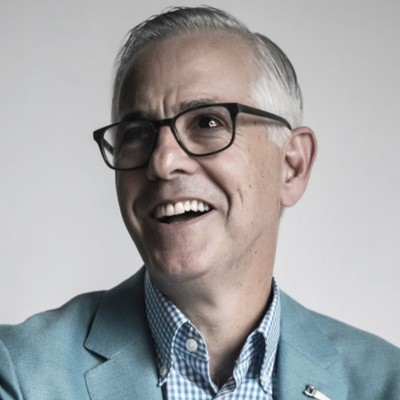
Top 10 Countdown: Super Huddle Takeaways for 2026
What do you get when you put 100+ B2B CMOs in a room with penguin jokes, tactical breakouts, and a whole lot of strategy talk? Flocking awesomeness.
In this special “Drew on Drew” episode, host Drew Neisser recaps the top 10 takeaways from CMO Huddles’ second annual Super Huddle, held in Palo Alto in November 2025. From bold positioning and AI orchestration to CMO-CRO alignment and the power of community, these insights are your roadmap to thriving in 2026.
Favorite takeaway? Drew wants to know—post it and tag @CMO Huddles on LinkedIn!
Renegade Marketers Unite, Episode 490 on YouTube
Resources Mentioned
- Books mentioned
-
- Courageous Marketing by Udi Ledergor
-
- Make it Snow by Denise Persson
-
- Scalable Acts of Marketing by Josh Leatherman
Highlights
- [0:44] Drew wore a penguin suit!?
- [3:13] Positioning is a BUSINESS decision
- [5:07] Rewire growth for 2026 (here’s how)
- [6:39] Culture is your AI advantage
- [8:54] Hire for energy (and other Udi Ledergor tips)
- [11:09] CMOs need to drive the AI bus
- [14:20] Ignore AEO/GEO at your own risk
- [16:15] GTM superpower: CMO/CRO alignment
- [18:18] Lovable’s lessons: Brand, speed, and delight
- [20:29] Strategy first, random acts never
- [22:08] Physical events cement community
- [24:35] About RepuTracker
Highlighted Quotes
“You may not be able to out-AI everybody, but you probably can out-culture them.” —Drew Neisser
“In B2B, beige is a choice. Don’t be beige.” —Drew Neisser
Full Transcript: Drew Neisser in conversation with Drew Neisser
Drew: Welcome marketing leaders and curious humans. I'm Drew Neisser, founder and Penguin-in-Chief of CMO Huddles, and your host for another Drew on Drew episode. This is where I get to both ask the questions and answer them. We do this about every 10 episodes or so, whether you need it or not. This episode, fresh off of our really successful Super Huddle just about a week and a half ago in early November, is a top 10 countdown of flocking awesome insights from the Super Huddle. Okay, that's a little redundant, but they're designed to help you swim, or perhaps fly, farther in 2026. So let's get right into it.
So, Drew, before we get too deep into this, did you really wear a full penguin suit to greet over, let's see, a hundred CMOs in Palo Alto? And if so, what the heck?
Drew: Guilty as charged. Yep, I wore a full… whoa, that's really looking bad. Okay. Wait, wait, wait. Okay, I did wear this hat at the welcome reception. People were very comfortable with that. By the way, we did have four incredible break dancers wearing penguin suits. You can see the video on LinkedIn.
Starting and kicking off the Super Huddle at about 9:15 a.m. on November 7th, I walked out in a full-body penguin suit complete with a purple tie, which I'm very proud of because that linked the penguin video that we did to promote the Super Huddle all the way to the beginning moment. And in terms of why…
Well, yeah, you know what, it wasn’t a dare. No, no, no. One attendee pointed out penguins are more than a mascot; it's a philosophy around the power of huddling. There was nothing like wearing a penguin suit to get the attention of the community and draw attention to this particular notion of huddling and why we huddle.
Because it turns out the differential temperature between inside and outside a huddle, it's not 10 degrees, it's not 50 degrees, it's 70 degrees warmer. This is not metaphoric. Literally, scientists call this social thermal regulation. And by the way, yeah, I think I should change the name from CMO Huddles to CMO Social Thermal Regulators.
I don’t think so, right? And it turns out that some huddles at the very center get up to 90 degrees Fahrenheit. So it's important also to acknowledge that this isn't just about survival, this is about thriving in extreme environments, which is exactly what CMOs are doing right now. So wearing this penguin suit, as silly as it was, really did set the tone. As Curtis Sparr, founder of Boss Sparr PR agency, said, when the guy running the event shows up in a full penguin suit, you know it's not your average CMO conference.
So I had a lot of fun wearing that and, you know, got to tell a few penguin/C‑MO jokes. So, all right, you got that answer? You're happy with that? Good. We can move on.
Drew: So yeah, penguin-suited. All right, let's get to takeaway number one. Not necessarily the number one takeaway, but takeaway number one.
Drew: Well, this really came up even before the Huddle. We had a Strategy Lab on Thursday, November 6th, and in the Strategy Lab there were four different breakouts. One on positioning led by Bob Wright of Firebrick, another one on generative AI led alternately by Lisa Adams and Samantha Stark, one led by Kathy Johnson on business plans, and the fourth one was Jamie Geyer leading org design and how all of that could change in 2026. So I happened to sit in on the positioning one and it was just so heartening to hear this.
Because really, I think the takeaway number one, and this extended into the Super Huddle the next day, is that positioning is a business decision. It's not a marketing decision. The takeaway that I have for you is: forget the messaging workshop. Positioning is the business decision about where you'll win and why. So I'm going to quote Bob Wright for a second: you know you have the right positioning when your CEO shows up, your CRO uses it to close deals, and your customers would actually miss your product if it disappeared.
So both in the workshop as well as in the session that Melinda Wilken did with Kevin Ruane from Precisely, CMOs were reminded that you need to start with a customer's problem, a big problem, not your product. You need to bring in some outside experts to really stretch your leadership team's comfort zone, and you don't sign off on a project like this until your CEO signs on.
So Kevin Ruane, I mentioned from Precisely, showed how realigned positioning gave his team a way to escape category sameness. This was really a masterclass on unsnoozing your strategy.
Drew: Okay, very good. Thank you for that one. Oh, what was takeaway number two?
Drew: So the second one was really “rewire growth for 2026.” And I know that's a little vague, so let me try to get more specific. Within the Strategy Labs, Kathy Johnson led discussions on business planning, and she notes in her great post on LinkedIn that CMOs dropped their filters and dug into what's really broken in go‑to‑market.
She asked, “What's the biggest challenge you're facing in 2026 planning?” And what was really amazing is the CMOs, they mapped it, they solved it, and they did it together. And so these are a couple of the things that Kathy surfaced. One, this PLG‑as‑in‑product‑led‑growth to sales‑led‑growth pivot. Two, tighter executive alignment, not just at the handshake level but at the system level.
And then budget shifting from programs that are broad to precision‑targeted things. Then she cites some crowd favorites, some frameworks: “feed the business, build the business, create the future” planning with time horizons. She also talked about one‑page go‑to‑market plans co‑signed by marketing and sales.
I am a huge fan of plans‑on‑a‑page. And three, creating stop lists. These are things that you're not going to do. The definition of a strategy is knowing what you say no to. So saying no is your highest growth move. Okay, that was takeaway number two.
Drew: All right, number three. What is number three?
Drew: Number three is all about culture and how culture is your AI advantage. And this was probably the first time where I really linked, in my mind, culture and AI, and culture was a dominant theme throughout the day and somewhat unexpected to me.
And I'm going to connect some dots for you. So we started with Udi Ledergor from Gong, who wrote the book Courageous Marketing. Later in the day we had Chris Degnan, the CRO, and Denise Persson, the CMO of Snowflake, on their book Make It Snow. And then, toward the end of the day, we had Carilu Dietrich sharing her experience working with Lovable and how this company enjoyed incredible growth.
And what was so interesting about all three of those—from Gong to Snowflake to Lovable—is the uniqueness of the culture and how that culture fueled AI adoption. And one thing to think about here is you may not be able to out‑AI everybody, but you probably can out‑culture them.
So Bindu Chellappan, who was from Fleetcor and one of the attendees, wrote, “The courage to be wrong is what leads to the most original ideas.” This was reinforced, and she was building off Udi’s inspiration, who said, “Best practices? Boring practices.” In order to have a culture of experimentation and use AI in ways that will get you to competitive advantage, you need psychological safety.
Udi talked about it. You need to understand that it's a strategy. If people feel like they can experiment and they can fail, as Tawny Perry reminded us, you've got to praise the process, not just the outcomes, because if you're only celebrating successes, you are not going to build a culture of experimentation.
So AI is going to require experimentation. You need a culture of experimentation to get there. You need psychological safety. This is how you get to build a brave team, not just a busy one.
Drew: Great. That was number three. Nice. Okay, number four. What the heck was number four?
Drew: A lot of these takeaways seem obvious, but there are some subtleties involved. When I talked to Udi in our fireside chat at the beginning, one of the things I asked was, "What do you think about your hiring process and why were you able to do so much creative work?" He said, "You know what? I hired for energy, not skills," because he knew we could teach people things, but you can't give people an injection of energy. I love that, and we explored that and the outcomes. As a result, he hired people who were good at something over here but showed tremendous initiative and a willingness to experiment. So that led them to do some crazy, crazy things. Among the crowd favorites was how Gong was able to buy its first Super Bowl ad. We all know that Super Bowl ads are $5 million, $6 million, $7 million, and Gong certainly didn't have that kind of budget. They figured out that if they bought five to ten percent of the spots in three target markets, they would reach 80 percent of their customers and prospects. So it was a local buy at just pennies on the dollar relative to a national buy. This was a great story that showed how CMOs can punch above their weight. It was smart, it was scrappy, and of course, they did a great job with the commercial too. This links back because it was an energetic person who figured out, "We can do it."
I'm going to add a couple of other things that Udi said that I think are worth referencing here, even though they're not about hiring for energy. One is the importance of ignoring the competition. He mentioned this several times—going your own way. I think that goes back to a culture of experimentation. The more you do your own thing and worry less about the competition, the more likely you are to be a differentiated brand and build the business. As part of that, now here’s where the innovation part comes in: he insists on dedicating at least five percent of his budget to bold experiments.
Drew: All right, so we're only on takeaway number five. What is that one?
Drew: This was sort of good news, bad news. CMOs need to drive the AI bus. Look, they were the first ones to get MarTech. They're the first ones to get the company to go digital. It was interesting—whether we're talking about anything from content to campaign creation to customer insights, CMOs are leading AI implementation at a lot of companies. San from OpenText talked about things they were doing. Chandler Patran was really helpful in reframing AI not as automation but more as orchestration, and this was, I think, a relief to a lot of people, because there was a lot of concern that folks are going to have to do just more with less since AI is supposed to mean you need fewer people.
And he looked at it as, "It's not about doing more with less, it's about doing more with the same," and gave the example, "Yeah, we want to grow by 30 percent next year, but I want to see if we can do it with the same team we have because we are able to do so much more. We're so empowered as a result of the way we are using AI—not just for automation, but for orchestration." So here are a few things that CMOs in the community are doing and mentioning. They're building digital twins of their best buyers so they can query them, research them, and use them for sales enablement. They're using AI to surface new champion contacts. We had the founder of Boomerang, which is sort of like LinkedIn Navigator on steroids, and they worked with Sift and Armand. Nazarian was there talking about how they worked with Seva for just a couple of months and went through all the reps' emails. They found 3,000 new customer champions who had sort of gone off and that represented a pretty big pipeline of opportunity. Another thing is deploying structured chaos so teams can test AI safely but boldly. This is sort of the sandbox approach.
Another CMO, Janet Jaiswal from Blueshift, talked about using Weblist.ai to deliver answers from their website to their visitors. If you go to CMOHuddles.com, you'll see a red box at the bottom, which has read and digested everything on both the CMO Huddles website and the Renegade Marketing website. It will give you answers. What Janet did took it a couple steps further—first, they replaced their Drift instance with Weblist.ai, and then they replaced the little Google search box at the top of the page with Weblist because the answers are now based on the content that you have on your website.
I love that story. Grant Johnson also summarized it in his post. He talked about how AI transformation is happening now. CMOs have the pulpit and the expertise to bring pragmatic AI implementation at scale to their organizations and help drive enterprise transformation. So thanks for that, Grant—he's also on our advisory board.
Drew: Okay, so we're moving along. Drew, what is takeaway number six?
Drew: This one might feel a little tactical, but it's "Ignore AEO (Answer Engine Optimization), some people call it GEO, at your own risk." I started my interview with Galli from Webflow with a quote from Kelly Hopping who said, "I think GEO is a load of crap." Her point was, if you're doing SEO really well, you don't really need to worry about AEO. Guy sort of agreed, saying, "Yeah, she's right," but noted that there are a few nuances you need to be thinking about because AEO—quoting Guy here—is an evolution of SEO.
Your websites now need to engage humans and efficiently communicate structure and meaning to machines. Efficiently communicating structure and meaning to machines means going through all the content on your website using something called schema. It's making sure all your H1 and H2 tags are correct. This is way above my pay grade technically, but there are technical things you can do with schema and structured content.
From a content standpoint, you need clean, authoritative answers to the questions your customers have. So AEO isn't just about traffic—it's about relevance in a world where Google is no longer the gatekeeper. I don't know if you need to spend a lot of time on Reddit, which is one of the influencers of some of the LLMs, but I do know you need to be thinking about this. If you ignore it, you're going to regret it because the pot of gold at the end of this rainbow is that the traffic generated by LLMs converts at least four times higher than your Google traffic. You are probably, hopefully, already being discovered on LLMs as we speak.
Drew: Okay, we're moving along. So Drew, takeaway number seven: what is it?
Drew: This one might feel a little tactical, but it's about ignoring AEO. Some people call it GEO, as in "answer engine optimization"—do so at your own risk. I started my interview with Galli from Webflow with a quote from Kelly Hopping, who said, "I think GEO is a load of crap." Her point was, if you're doing SEO really well, you don't need to worry about AEO. And Guy sort of said, "Yeah, she's right." But there are a few nuances you really need to be thinking about because AEO (and I'm quoting Guy here) is an evolution of SEO. Your websites now need to engage humans and efficiently communicate structure and meaning to machines. Efficiently communicating structure and meaning to machines means going through all the content on your website using something called schema. It's making sure all your H1 and H2 tags are set correctly. This is way above my pay grade technically, but there are technical things you can do with schema and structured content.
From a content standpoint, you need clean, authoritative answers to the questions your customers have. So AEO isn't just about traffic—it's about relevance in a world where Google is no longer the gatekeeper. I don't know if you need to spend a lot of time on Reddit—which is one of the influencers of some of the LLMs—but you need to be thinking about this. If you ignore it, you'll regret it, because the pot of gold at the end of this rainbow is the traffic generated by LLMs, which converts at least four times higher than your Google traffic. And you're hopefully already being discovered on LLMs as we speak.
Drew: Okay, we're moving along. So Drew, takeaway number seven—what is it?
Drew: This one is a result of my conversation with Chris and Denise from Snowflake—the CMO-CRO Alignment. Alignment, being the key word, is a go-to-market superpower. I have to tell you, this was one of those mic-drop moments. I acknowledged that Denise Pearcy and Chris Degan had worked together for nine years, and I asked the hundred-plus marketing leaders in the audience, "How many of you have worked with your CRO for nine years?" There wasn't another hand raised. Then I asked, "Okay, how many of you have survived through two CEOs?" A few hands. Then, "Keep your hand up if you've survived through three CEOs." Just a couple hands. "Okay, four CEOs?" All the hands were down.
So, Chris and Denise worked together for nine years through four CEOs. Clearly, this was a bulwark; the two of them were so in sync, their jobs were in some ways secure. But more importantly, they got it done. They made it happen for Snowflake, which enjoyed incredible growth. Denise talked about her initial interview, describing herself—some people think of her as an ice queen because she's Swedish. They had a lot of shared beliefs. Denise described marketing as a service for sales. Chris talked about how, "We didn't talk about MQLs. We shared urgency, trust, and aligned accountability."
So what was their model? Weekly syncs, fast decisions, no defensiveness, just doing the work. This wasn't just a kumbaya moment—actually, I have to say, it was also coordination at scale, and it built one of the most admired go-to-market machines in B2B.
Drew: Alright. I want to see that whole interview again on tape. Well, you will. So what's takeaway number eight?
Drew: Alright, you asked, so build brand speed and delight into your DNA. Towards the end of the day at the super huddle, I had a chance to talk to Carol Lou Dietrich about the phenomenal success of Lovable. They went from zero to one hundred million in revenue in eight months, and I think their current valuation is somewhere around $1.8 billion. Carol Lou was funny because she couldn't—or didn't want to—say, "Well, they did these things and grew phenomenally." It was a collection of a lot of things in my mind. One was this culture of speed and how speed beats everything. They would drop products weekly. They worked intensely with influencers. Social media—they turned it on its ear. Sometimes they'd push out rage-baiting content and do bee swarming, where someone in the company would drop a post and everyone else would like it to make it go viral.
The collective takeaway was that a lot of U.S. companies wouldn't take it that far—they didn't care. They weren't worried about risk; they took a lot of chances early on, and it paid off. But, at the core, they had a product that delighted people quickly. You could think of this as product-led growth; in some ways, it was B2C2B. They built up a large user group who could use this tool to create amazing things, and the tool itself—the output—became the marketing. So, customers became the marketing.
One other thing that struck me was the visibility of the CEO—it wasn't an accident. There was someone behind the curtain helping the CEO really engage and push things very far. I think one lesson you can definitely take away in B2B: Beige is a choice. Don't be beige.
Drew: Alright, we're getting through this. Drew, takeaway number nine—what is it?
Drew: Strategy first. Random acts never. Kathy Johnson really nailed this in her writeup. She said, "Before we finalize anything, we are revalidating why we win and simplifying it." There's a lot of magic in the focus and simplicity of what marketers want to do next year. So, having strong, differentiated, clear positioning and making sure everyone understands it. The random acts part—CMOs really talked about killing MQs, not presenting them, not showing them. They're not a thing. If you have to report, talk about sales-qualified opportunities—however you define those, and make sure you define them.
As part of simplification, Sam was talking about trying to align behind one KPI, and Denise and Chris talked about, and this was definitely, sales-qualified opportunities. What the CMOs were doing was prioritizing clarity over complexity. We had Josh Leatherman, who wrote "Scalable Acts of Marketing"—it's a great book (oh yeah, I wrote the foreword to it)—and I highly recommend that you get it. He talked about and reminded the CMOs in the audience, "You're not just a marketer. You're an officer of the company, which means you've got to operate like one."
Drew: Alrighty, we're getting down to the wire here. Drew, takeaway number ten—what is that?
Drew: Well, this one may not be a surprise to any of you, but it was gratifying: it's physical events that cement community. They really aren't about leads—they're about belonging. This quote comes from Joe Andrew, CMO of Support Logic, who said, "CMOs huddled together to share warmth, protect each other from the storm, and rotate to keep the group stronger." Was he talking about penguins or CMOs? Huh—maybe I got him confused, but they're inseparable.
What happened at the super huddle—from the strategy lab to our welcome reception to the VIP dinner and then our all-day super huddle—you could just see the connections CMOs were making. By the way, one of the things we do at the super huddle is table huddles, where the table works together. The first was on how they're using Gen AI more effectively, and the second was, "What are you going to do differently in 2026?"
It was amazing to watch them interact and help each other. And as I said, there isn't a single challenge. We actually asked everyone to create challenge cards and talk about their big "M" challenge and little "m" challenge. I've got them right here and we went through them. We're organizing all those now. What's fascinating is that there isn't a single challenge in this stack that someone in the room hasn't already solved. The power of the community to help each other was profound, clear, and really heartwarming for me. It was flocking awesome. We promised "flocking Osmer" from the 2024 conference, and I think we delivered it. So, we're just going to call that marketing manifestation: you present this promise, and then you deliver on it. I'm really proud of that. I think you got a sense here of what's happened.
We will have videos that come out later from various sessions. So, when we bring you together, it's pretty flocking awesome. That's how we do it.
Drew: Oh, you're about to say something. What is it? What's the last thing—the kicker?
Drew: Yes, at the super huddle, we actually introduced our new tracker tool, which is designed to help the members of the Leader Program connect their brand investments—their reputational investments—to business outcomes. We're providing a score every single month based on five separate measures, from fifteen to twenty different publicly available sources. We're excited that's going out to our members. Actually, we did it for the attendees, too. They'll get at least a couple months free. So, we're excited to help them solve one of the biggest challenges: "How do we talk about reputation if we're not measuring it?"
Drew: Well, that was awesome. Drew, thank you for all of that feedback. I think people are going to walk away with ideas, inspiration—or maybe just a weird desire to buy a penguin costume. I don't know. Whatever it is, if you enjoyed this, please share this episode. Until next time, keep on huddling, experimenting, and keep being floss—a flocking awesome CMO. That's it. Peace out.
For more interviews with innovative marketers, visit renegademarketing.com/podcast and hit the subscribe button.
Show Credits
Renegade Marketers Unite is written and directed by Drew Neisser. Hey, that's me! This show is produced by Melissa Caffrey, Laura Parkyn, and Ishar Cuevas. The music is by the amazing Burns Twins and the intro Voice Over is Linda Cornelius. To find the transcripts of all episodes, suggest future guests, or learn more about B2B branding, CMO Huddles, or my CMO coaching service, check out renegade.com. I'm your host, Drew Neisser. And until next time, keep those Renegade thinking caps on and strong!