The GTM Team of the Future Might Not Be Human
Amanda Kahlow shared a glimpse of the future of GTM, an AI “superhuman” that can qualify, pitch, demo, and onboard buyers in a single conversation.
At the CMO Huddles Strategy Labs this spring, Amanda Kahlow brought an unusual guest on stage.
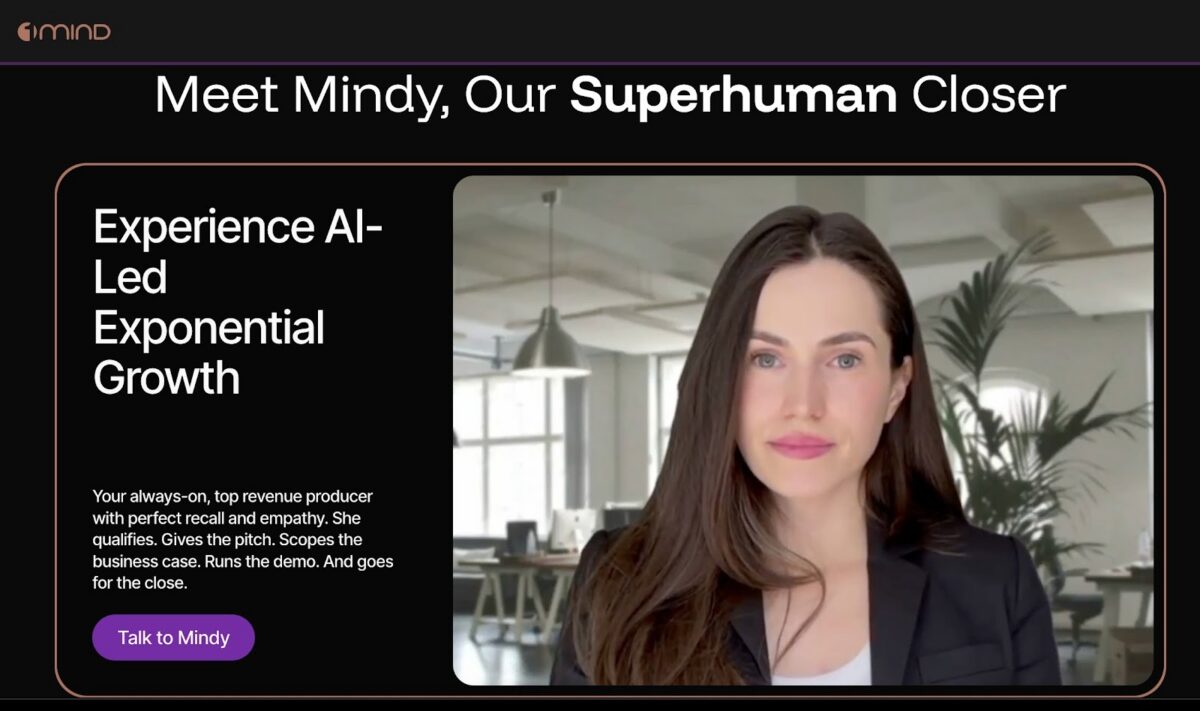
Her name was Mindy.
Unlike the other attendees in the room, Mindy wasn’t a CMO, or even human… She was an AI “superhuman,” a conversational AI built on the 1mind platform designed to interact with buyers across the entire go-to-market journey.
At first, the demo felt familiar. Mindy answered questions, explained product capabilities, and showed how a workflow worked.
Then Kahlow decided to push the AI a little.
“Explain marketing pipeline conversion using a penguin analogy.”
The answer came instantly, and the room burst into laughter.
What started as a demo suddenly felt like something else: a glimpse of what B2B go-to-market might look like if AI can qualify buyers, answer questions, demonstrate products, and guide onboarding in a single conversation.
Meet the AI “Superhuman”
What Is an AI “Superhuman” in Go-To-Market?
An AI superhuman is a conversational AI system that can perform tasks typically handled by multiple sales roles—such as qualification, product explanation, technical Q&A, demos, and onboarding—within a single interaction.
Kahlow describes systems like Mindy as AI superhumans. These teammates combine capabilities that are typically spread across multiple roles in a go-to-market team into a single AI-driven interaction.
In most B2B organizations today, expertise is distributed across several roles:
- Sales Development Reps (SDRs) qualify inbound leads
- Account executives (AEs) run discovery and present the solution
- Sales engineers answer technical questions
- Customer success teams handle onboarding
Each role adds expertise, but each handoff can also slow down the buying process.
Kahlow’s idea with AI superhumans is to make that expertise available immediately in a single conversation. In practice, an AI system like Mindy can:
- Greet visitors on a website
- Answer questions about products
- Explain capabilities
- Show workflows or demos
- Guide users through onboarding steps
The goal is not simply automation. It’s making expertise available the moment buyers are ready to engage.
The Real Problem: Buyer Fatigue
Kahlow framed the opportunity around a problem many B2B leaders recognize: buyer fatigue. She asked the audience to think about the typical buying process from the customer’s perspective.
A buyer might:
- Search online or ask an AI assistant for solutions
- Land on a company website with thousands of pages
- Fill out a form to talk to someone
- Wait for an SDR to qualify them
- Wait again for an AE
- Eventually meet a sales engineer
By the time the buyer reaches someone who can fully explain the solution, the process may have taken several steps and multiple meetings.
The Penguin Analogy That Stole the Show
During the demo, Kahlow challenged Mindy with a creative prompt:
“Explain marketing pipeline conversion using a penguin analogy.”
Mindy described a shoreline where curious penguins arrive looking for fish. Without guidance, many wander around and eventually slide back into the ocean. But an always-available guide penguin could greet them the moment they arrive and help them quickly find the fish.
The metaphor translated neatly to marketing:
- Your website is the shoreline
- Visitors are the penguins
- Many of them leave because no one engages them fast enough
An AI superhuman acts as the guide penguin, meeting buyers immediately and helping them find what they need. Mindy wrapped up her analogy with a qualifying question:
“What part of the shoreline is icy for you right now? Top of funnel engagement, qualification, or speed to meeting?”
The room laughed, but the strategic point was clear: Speed and context matter more than ever in the modern buying journey.
AI Joining the Sales Call
One of the most surprising parts of the demonstration wasn’t on the website. It happened inside the meeting itself.
Kahlow showed how Mindy could join a call alongside human sellers, acting like a live sales engineer. When someone asked a technical question, Kahlow simply said:
“Hey Mindy, can you jump in and explain that?”
The AI responded immediately, pulling up slides and explaining the concept. That’s significant because in most sales calls today:
- A rep has to search for the right deck
- A specialist may need to join the next meeting
- Technical questions slow the process down
With an AI assistant on the call:
- Relevant slides appear instantly
- Case studies can be surfaced in real time
- Technical explanations happen on demand
In effect, the system acts like an always-available expert with perfect recall.
Will AI Replace SDRs?
A question many leaders in the room were thinking eventually surfaced: what happens to the SDR role if AI can do this? Kahlow didn’t dodge it.
“Humans are inefficient. They have time limitations and capacity limitations.”
In many organizations today, SDRs qualify inbound leads before handing the conversation to sales.
AI systems can now perform that qualification instantly. And unlike a human SDR, they don’t have to stop there. They can continue the conversation—explaining the product, answering technical questions, and guiding buyers toward the next step.
That possibility raises a bigger question: If AI can qualify, pitch, answer technical questions, and demonstrate products, how might companies rethink the structure of their go-to-market teams?
Beyond a Chatbot: A Network of AI Superhumans
Kahlow’s vision goes beyond a single assistant.She encourages leaders to imagine a network of AI superhumans working across the entire go-to-market lifecycle.
Examples detailed during the Labs included:
Outbound engagement
AI agents initiating conversations related to content or topics.
Website conversations
Visitors asking questions and exploring solutions conversationally.
Sales calls
AI assistants joining meetings and answering technical questions.
Product onboarding
Guided walkthroughs helping new users learn the product.
Customer support
AI responding to questions without requiring customers to search documentation.
Over time, these systems could maintain a continuous memory of the buyer, allowing each interaction to build on the last. Instead of restarting the conversation every time a new rep joins the process, the AI maintains the context.
Key Takeaways for CMOs
Amanda Kahlow’s demo highlighted several shifts marketing leaders should be watching closely:
AI can engage buyers instantly
Instead of waiting for scheduled meetings, buyers can ask questions and explore solutions immediately.
Sales expertise may become available on demand
AI assistants can surface product knowledge, slides, and technical explanations during conversations.
GTM experiences may become more conversational
Buyers increasingly expect to interact with companies the same way they interact with AI assistants.
Early experimentation matters
The organizations exploring AI-powered go-to-market today will likely define the next generation of B2B buying experiences.
The Bigger Question
Kahlow ended the session with a challenge.
If you were designing a go-to-market model today in an AI-first world, would you build the same sales process we use today? Or would you design something different?
The companies that answer that question first may define the next era of B2B growth.
FAQs: AI, Sales Roles, and the Future of GTM
An AI superhuman is a conversational AI system designed to combine capabilities typically spread across several sales roles—such as qualification, product explanation, and technical guidance—into a single interaction.
AI can provide immediate answers, guide buyers through product information, and demonstrate workflows without requiring multiple meetings with different team members.
The discussion at the event focused on how AI can perform tasks such as qualification and answering technical questions. Many organizations are still exploring how these systems may change team structures.
Examples discussed at the session included website conversations, outbound engagement, sales call assistance, product onboarding, and customer support.